
 previous article in this issue previous article in this issue | next article in this issue  |
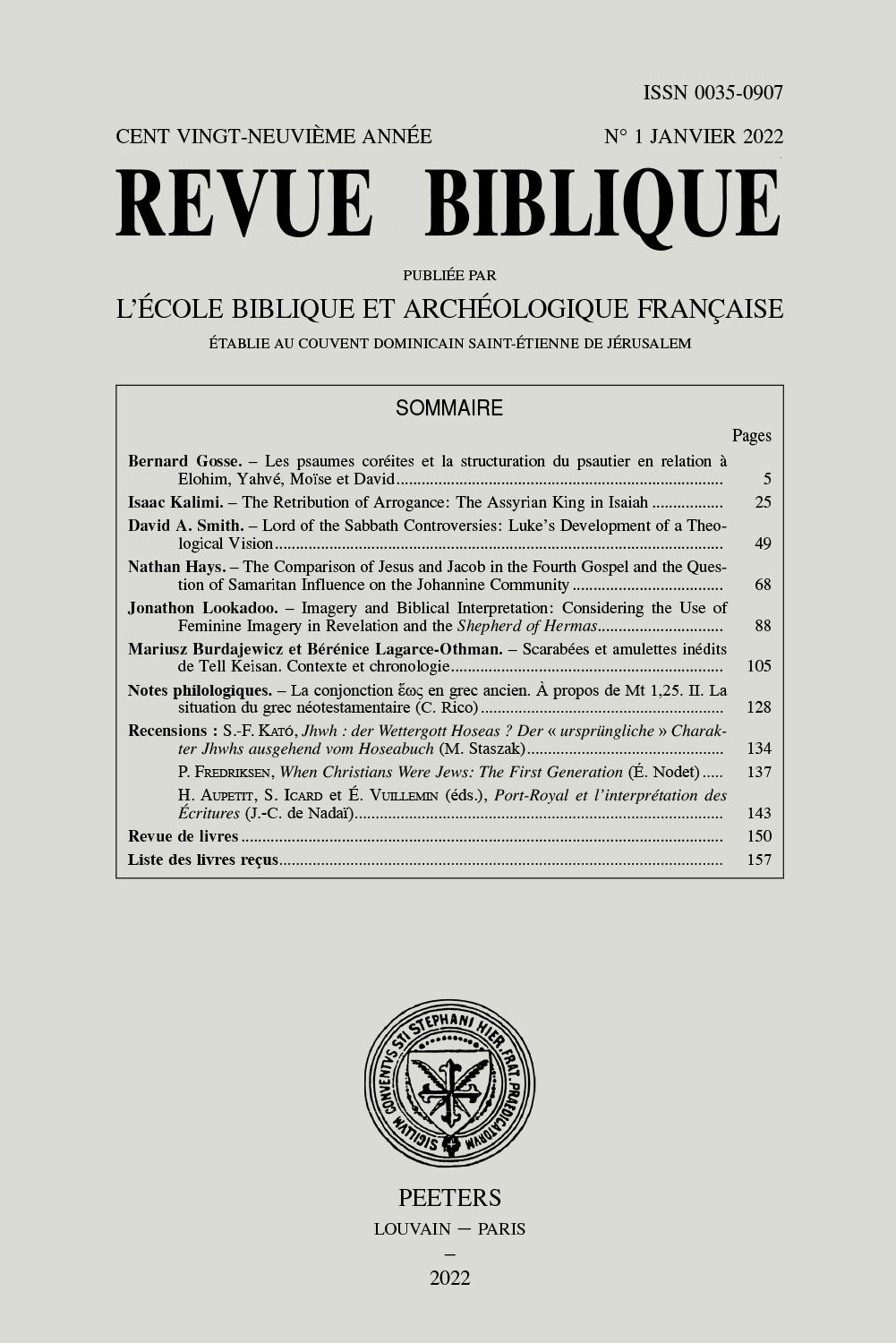
Preview first page |
Document Details : Title: Hos 6,1-2 in the Septuagint and Old Latin Subtitle: Shorter Forms and Textual Fluidity as Evidence of a Developing Hebrew Vorlage? Author(s): CATALANO, Alfio Giuseppe Journal: Revue Biblique Volume: 132 Issue: 4 Date: 2025 Pages: 517-533 DOI: 10.2143/RBI.132.4.3294768 Abstract : Beginning with Tertullian, the text of Hos 6,1-2LXX was frequently quoted by the Greek and Latin Fathers as a prophecy of Christ’s resurrection on the third day. However, when its multiple attestations in the manuscripts and in the patristic literature are analysed, shorter textual forms are sometimes found, partly characterised by distinctive variant readings. The aim of the paper is to investigate whether such variants are incidental or correspond to genuine lectiones breviores. The research can contribute to a diachronic explanation for some peculiarities of a difficult Hebrew text, hitherto attributed to stylistic choices or corruption in textual transmission. À partir de Tertullien, le texte d’Os 6,1-2LXX a été fréquemment cité par les Pères grecs et latins comme une prophétie de la résurrection du Christ le troisième jour. Cependant, lorsque ses multiples attestations dans les manuscrits et dans la littérature patristique sont analysées, des formes textuelles plus courtes sont parfois trouvées, en partie caractérisées par des variantes distinctives. L’objectif de cet article est de déterminer si ces variantes sont fortuites ou si elles correspondent à de véritables lectiones breviores. La recherche peut contribuer à une explication diachronique de certaines particularités d’un texte hébreu difficile, attribuées jusqu’à présent à des choix stylistiques ou à une corruption dans la transmission textuelle. |
|